
Table of Contents
- Christian Life Coaches Guide to Separating Business Finances
- 🕊️ Introduction: Stewardship, Strategy, and Spiritual Excellence
- Why Separating Finances Matters for Christian Life Coaches
- Step 1: Choose the Right Business Structure (LLC, PLLC, or Sole Proprietor)
- LLC (Recommended for most coaches)
- PLLC (For licensed professionals)
- Sole Proprietor (Not recommended long-term)
- Why it matters:
- Step 2: Open a Dedicated Business Bank Account
- What you need:
- Why this matters:
- Tip for Christian life coaches:
- Step 3: Get a Business Debit Card or Business Credit Card
- This protects:
- Step 4: Pay Yourself a “Founder’s Salary” or “Owner’s Draw”
- Two common methods:
- What NOT to do:
- Step 5: Use a Digital Accounting System to Track Everything
- Beginner-friendly:
- Track:
- Why this matters for Christian life coaches:
- Step 6: Set Aside 20–30% of Every Payment for Taxes
- How to eliminate this stress:
- Step 7: Separate Business Expenses From Personal Spending
- Business expenses include:
- Step 8: Review Your Finances Monthly
- Step 9: Prepare for Future Growth (Scaling, Hiring, and Ministry Expansion)
- Final Takeaway: Financial Separation Protects Your Calling
- Next Step for You
- FAQs
Christian Life Coaches Guide to Separating Business Finances
Christian Life Coaches Guide to Separating Business Finances
🕊️ Introduction: Stewardship, Strategy, and Spiritual Excellence
As a Christian Life Coach, you’re doing more than running a business—you’re stewarding a calling. You serve clients through transformation, encouragement, and Spirit-led guidance, helping them walk boldly into what God created them to be. But while your assignment is spiritual, the way you manage the business side of your coaching practice also matters deeply.
One of the most overlooked areas of stewardship for Christian life coaches is financial separation: How do you keep your business money and personal money from mixing together?
It might seem like a simple administrative task, but scripturally and practically, it’s a powerful act of wisdom, integrity, and order.
Jesus taught in Luke 16:10,
“Whoever can be trusted with little can also be trusted with much.”
Separating your finances isn’t just smart—it positions you for growth, protects your calling, and reflects the excellence of Kingdom stewardship.
Let’s break it down clearly and biblically so you can move forward confidently.
Why Separating Finances Matters for Christian Life Coaches
It’s more than bookkeeping. It impacts:
✔️ Legal Protection
Mingling personal and business funds exposes you to risk. If there’s ever a dispute, audit, or lawsuit, unclear finances weaken your protection.
✔️ God-Honoring Stewardship
Order honors God. Your coaching business is part of your ministry assignment, and handling it with integrity reflects spiritual maturity.
✔️ Financial Clarity
You’ll instantly know your profit, your expenses, and what needs improvement.
✔️ Professional Credibility
Clients take your business more seriously when you operate with financial structure.
✔️ Tax Simplicity
When finances are separated, tax filing becomes clean, fast, and compliant.
For Christian life coaches, establishing financial boundaries is both a practical and spiritual decision. It frees you to grow without chaos or confusion.
Step 1: Choose the Right Business Structure (LLC, PLLC, or Sole Proprietor)
Your business structure determines how your finances should be managed. Here’s a quick breakdown:
LLC (Recommended for most coaches)
An LLC creates a legal separation between YOU and your business.
Benefits:
Strong liability protection
Professional credibility
Cleaner tax reporting
Easier financial separation
This is the simplest way for Christian life coaches to protect their calling while staying compliant.
PLLC (For licensed professionals)
If you are a therapist or hold a state-regulated license, your state may require a PLLC.
Sole Proprietor (Not recommended long-term)
You can start here, but there’s no liability protection, and separating finances is harder.
Why it matters:
If you choose an LLC or PLLC, you’re legally REQUIRED to separate finances.
Mixing them can “pierce the corporate veil” and remove your legal protection.
Step 2: Open a Dedicated Business Bank Account
This is the FIRST and most essential action step.
What you need:
Your LLC documents (or state registration)
Your EIN (free from IRS website)
Your driver’s license
Why this matters:
All coaching income must go into this account
All coaching expenses must be paid from this account
You instantly create a paper trail that protects you legally and financially
Think of your business account as the “storehouse” for the work God has assigned you.
Tip for Christian life coaches:
Choose a bank that offers:
No monthly fees
Free business checking
A clean mobile app to track expenses
Step 3: Get a Business Debit Card or Business Credit Card
Use this ONLY for:
Coaching-related purchases
Subscriptions (Zoom, Canva, email tools)
Courses, trainings, certifications
Office supplies
Marketing and promotion
Travel for coaching events
Website hosting or software
Never pay for groceries, gas, gifts, or personal items with this card.
This protects:
your legal standing
your tax deductions
your accountant’s sanity
your peace of mind
It also displays integrity, which should mark the work of Christian life coaches.
Step 4: Pay Yourself a “Founder’s Salary” or “Owner’s Draw”
Here’s the part most coaches get wrong: Your business account is NOT your personal wallet.
You pay yourself the same way a job pays you—through withdrawals that are tracked and documented.
Two common methods:
✔️ Owner’s Draw (most common for coaches)
You simply transfer money from the business account to your personal account when needed.
✔️ Salary (for S-Corp structure)
This requires payroll software and comes later when you scale.
What NOT to do:
Don’t pay for personal bills or subscriptions directly from your business card.
Don’t transfer random amounts with no documentation.
When your finances have structure, your business becomes trustworthy, sustainable, and expandable—something vital for Christian life coaches who want to scale with integrity.
Step 5: Use a Digital Accounting System to Track Everything
You do NOT need expensive software to start. You can use:
Beginner-friendly:
Wave (free)
FreshBooks
QuickBooks Simple Start
Track:
Income
Expenses
Profit and loss
Tax deductions
Coaching revenue categories
Why this matters for Christian life coaches:
It lets you measure growth, stewardship, and financial health.
Proverbs 27:23 says:
“Be sure you know the condition of your flocks, give careful attention to your herds.”
Your finances are part of the “flock” God entrusted to you.
Step 6: Set Aside 20–30% of Every Payment for Taxes
One of the biggest mistakes new coaches make is failing to prepare for taxes and then panicking later.
How to eliminate this stress:
Every time a client pays you, immediately transfer 20–30% into a tax savings account.
This ensures:
You avoid debt
You eliminate anxiety
You honor the law
You operate in integrity
Romans 13:7 reminds us to “give to everyone what you owe.” This includes taxes.
Step 7: Separate Business Expenses From Personal Spending
Make sure ALL business payments come from your business account:
Business expenses include:
Marketing materials
Website and domain
Courses and certifications
Software tools
Coaching program platforms
Christian coaching conferences
Office supplies
Branding and logo design
Personal development for coaching
This protects your tax deductions and keeps your financial records clean.
It also positions Christian life coaches to grow without financial confusion.
Step 8: Review Your Finances Monthly
Set a monthly “Money Stewardship Meeting” with yourself and God.
Review:
Revenue
Expenses
Profit margin
Upcoming bills
Client payments
Growth opportunities
This is not just accounting— It’s worship through stewardship.
Pray over your business, your clients, your finances, and your future assignments.
Step 9: Prepare for Future Growth (Scaling, Hiring, and Ministry Expansion)
When your finances are clean and separated, you can grow with confidence.
Separated finances prepare you for:
Publishing books
Launching group programs
Running paid workshops
Adding multiple income streams
Hiring assistants
Creating a ministry arm
Receiving donations properly
Many Christian life coaches eventually build BOTH:
an LLC for income-generating coaching
a nonprofit for ministry outreach
But it all begins with the discipline of financial separation.
✝️ Biblical Insight: God Blesses Order
Scripture consistently emphasizes order, stewardship, and faithfulness.
1 Corinthians 14:40 — “Let all things be done decently and in order.”
Proverbs 21:5 — “The plans of the diligent lead to abundance.”
Habakkuk 2:2 — “Write the vision and make it plain.”
Your financial structure is one of the ways you honor God with the calling He gave you.
It is not unspiritual.
It is not worldly.
It is obedience.
Final Takeaway: Financial Separation Protects Your Calling
Separating your business and personal finances is a spiritual and strategic step that sets you apart. It positions Christian life coaches to operate with:
Integrity
Excellence
Legal protection
Financial clarity
Peace of mind
Long-term scalability
It’s one of the most practical ways to steward your purpose, honor God, and build a coaching business that lasts.
Next Step for You
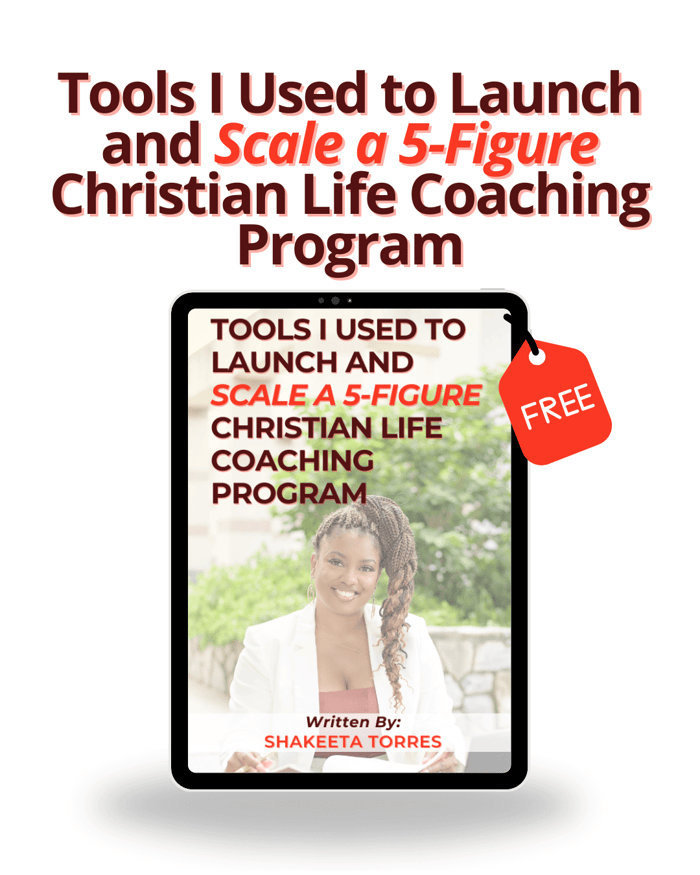
If you’re ready to strengthen the foundation of your coaching business, download the free resource:
📘 “Tools I Used to Launch and Scale a 5-Figure Christian Life Coaching Program.”
This guide helps you align your calling with a sustainable, compliant, and Spirit-led business structure.
 CLICK HERE FOR YOUR FREE GUIDE
FAQs
1. Why should Christian Life Coaches separate business and personal finances?
Separating finances protects your personal assets, simplifies taxes, and ensures clear bookkeeping. For Christian Life Coaches, it also reflects good stewardship and professionalism, allowing your business to grow sustainably while honoring your Kingdom calling.
2. How can Christian Life Coaches start separating their finances?
Begin by opening a dedicated business bank account and using a separate business debit or credit card for all coaching-related income and expenses. Track all transactions with accounting software to maintain clarity and organization.
3. What is the best legal structure for Christian Life Coaches to separate finances?
Most Christian Life Coaches benefit from forming an LLC, which provides legal protection and clearly separates business finances from personal funds. Licensed coaches may need a PLLC, while donation-based ministries may use a nonprofit structure.
4. How should Christian Life Coaches pay themselves from their coaching business?
Pay yourself through a regular owner’s draw or salary from your business account. Avoid using business funds for personal expenses directly. This maintains financial separation and ensures accurate tax reporting.
5. What tools help Christian Life Coaches keep business and personal finances separate?
Accounting software like QuickBooks, FreshBooks, or Wave helps track income, expenses, and tax obligations. Using these tools keeps finances organized, supports budgeting, and allows Christian Life Coaches to make strategic, informed decisions.