
Table of Contents
- Christian Life Coaches: Social Media or Podcasts or Speaking
- 🕊️ Introduction: Your Message Needs a Megaphone
- Part 1: Social Media — The Fastest Way to Build Connection
- Why Social Media Works
- Part 2: Podcasting — The Best Platform for Deep Trust
- Why Podcasting Works
- Challenges to Consider
- Part 3: Public Speaking — The Fastest Path to Authority and Clients
- Why Speaking Works
- Challenges to Consider
- Part 4: So Which Platform Should You Choose?
- Part 5: The Spirit-Led Strategy for Sustainable Growth
- Part 6: What God Says About Expanding Your Influence
- Final Answer: Where Christian Life Coaches Should Focus
- Next Step
- FAQs
Christian Life Coaches: Social Media or Podcasts or Speaking
🕊️ Introduction: Your Message Needs a Megaphone
Growing an online audience isn’t just about algorithms—it’s about assignment.
As a Christian Life Coach, you’re not simply promoting a service, you’re stewarding a message God placed inside you. And in today's digital world, that message needs the right platform to reach the people praying for the breakthrough you carry.
That leads to one of the biggest questions faith-based coaches face:
“Should I focus on social media, podcasting, or speaking to grow my audience?”
Each platform has strengths. Each reaches people differently. And each one can multiply your impact if used strategically and prayerfully.
Today, we’ll break down the pros, the pitfalls, and the purpose behind each platform so you can choose where to invest your time for the greatest Kingdom return.
Let’s step into this with clarity.
Part 1: Social Media — The Fastest Way to Build Connection
Social media is often the first platform Christian life coaches consider—and for good reason. It’s where your ideal clients already spend hours daily. When used intentionally, it builds trust and familiarity faster than any other platform.
Why Social Media Works
1. Instant visibility
Unlike blogging or podcasting, which take time to grow, social posts can reach hundreds or thousands within hours.
2. Story-driven communication
Your audience wants to see your transformation and your heart. Social media gives people a window into:
Your faith
Your coaching style
Your values
Your personality
This builds relational trust—which is essential for coaching.
3. Perfect for short, powerful messages
You don’t need long content to be impactful. Many Christian life coaches see success by sharing:
30–60 second reels
Short devotionals
Testimonies
Quick mindset shifts
Behind-the-scenes moments
Live prayer or Q&A sessions
These bite-sized moments create spiritual and emotional resonance.
Challenges to Consider
You must post consistently—2–5 times per week minimum
You’re at the mercy of the algorithm
Virality doesn’t always equal clients
Oversaturation can make your message harder to stand out
Social media is excellent for visibility—but it should rarely be your only platform.
Part 2: Podcasting — The Best Platform for Deep Trust
If social media is the handshake, podcasting is the hour-long coffee meeting.
This is where your audience doesn’t just meet you—they follow you.
Podcasting allows Christian life coaches to create a coaching-like environment in an intimate, conversational way.
Why Podcasting Works
1. People listen longer
The average podcast episode holds attention for 20–40 minutes—much longer than social media.
A podcast positions you as a thought leader. Not just inspirational—credible.
Listeners begin to see you as:
A guide
A mentor
A trusted voice
A spiritual leader
A teacher they return to weekly
3. It attracts ready-to-invest clients
Podcast listeners convert at a significantly higher rate than social media followers.
Why?
Because they’ve already spent hours with you.
They know your heart, your voice, your depth.
4. Episodes live forever
Unlike social posts that disappear in 48 hours, podcast episodes continue gaining new listens months—even years—later.
Podcasting is a long-game strategy with compounding returns.
Challenges to Consider
Requires planning and structure
Editing can be time-consuming
Growth is slower but deeper
Requires consistency (weekly or biweekly)
Podcasting is powerful when you want your audience to feel deeply connected to your message.
Part 3: Public Speaking — The Fastest Path to Authority and Clients
Sometimes God opens doors not on screens, but on stages.
Speaking—whether on Zoom, at events, inside churches, at women’s ministries, or on live webinars—offers unmatched authority positioning.
For Christian life coaches who feel called to teach, minister, or speak prophetically, this platform can accelerate both reach and revenue.
Why Speaking Works
1. Instant trust
When people hear you live, they feel your authenticity, passion, and anointing.
Trust forms instantly.
2. Highest client conversion rate
Speaking engagements often produce more clients in a single session than weeks of social media posting.
Because people don’t just hear about your message—they experience it.
3. Perfect for delivering transformation
Coaching is about impact, and speaking allows you to create transformation in real-time.
4. Ideal for workshops, retreats, and group programs
Speaking attracts people ready for deeper engagement.
Challenges to Consider
Requires confidence and skill
Opportunities take time to build
Not everyone enjoys live delivery
Requires preparation and energy
Speaking is unmatched for authority, but it works best when combined with another platform that keeps your audience engaged between events.
Part 4: So Which Platform Should You Choose?
Here’s the good news:
You don’t need to choose one—you need to choose your starting point.
Based on your personality, calling, and comfort level, one platform will feel more natural. That’s where you start. Then you layer the others as God expands your capacity.
Let’s compare them side-by-side:
| Platform | Best For | Strength | Time to Results |
|---|---|---|---|
| Social Media | Visibility + connection | Fast reach | Fast |
| Podcasting | Depth + authority | Loyal audience | Medium |
| Speaking | Leadership + conversions | High trust | Fastest conversions |
Part 5: The Spirit-Led Strategy for Sustainable Growth
Most Christian life coaches struggle because they try to use all platforms at once.
That leads to burnout, inconsistency, and frustration.
Instead, follow this strategic build:
Phase 1: Choose a Primary Platform
Your primary platform is where your voice naturally flows.
If you love quick encouragement → Social media
If you teach deeply → Podcasting
If you feel called to minister or train → Speaking
Your primary platform should get 70% of your content attention.
Phase 2: Support It with a Secondary Platform
Once your primary is stable, choose a secondary platform that builds on your strengths.
Examples:
Social media + podcast
Podcast + speaking
Speaking + social media
When two platforms work together, they create a content ecosystem that grows without burnout.
Phase 3: Funnel Everything Back to Email
Social media can fail. Algorithms change. Podcasts can slow down. Speaking events come and go.
Your email list is the most reliable audience you will ever have.
Invite your audience to opt into:
A devotional
A clarity guide
A free worksheet
A prayer journal
A mini-training
A 7-day spiritual reset
Every platform should bring people back to a place where they can stay connected long-term.
Part 6: What God Says About Expanding Your Influence
Proverbs 18:16 reminds us:
“A man’s gift makes room for him.”
Your gift already has a platform assigned to it.
Your voice already has people waiting for it.
Your message is already prepared for the hearts it is meant to reach.
Jesus used multiple methods to reach people—teaching, preaching, storytelling, one-on-one conversations. You, too, have permission to use different methods as the Holy Spirit leads.
Final Answer: Where Christian Life Coaches Should Focus
Start with the platform that aligns with your God-given voice—not the trend.
If you’re unsure, here’s a simple guide:
If you’re expressive, visual, or energetic → Start with social media
If you’re a teacher, mentor, or storyteller → Start with podcasting
If you’re bold, prophetic, or passionate → Start with speaking
Then add the others slowly, prayerfully, and sustainably.
When your platform matches your calling, your message multiplies.
Next Step
Ready to grow your audience with clarity?
Download my free guide:
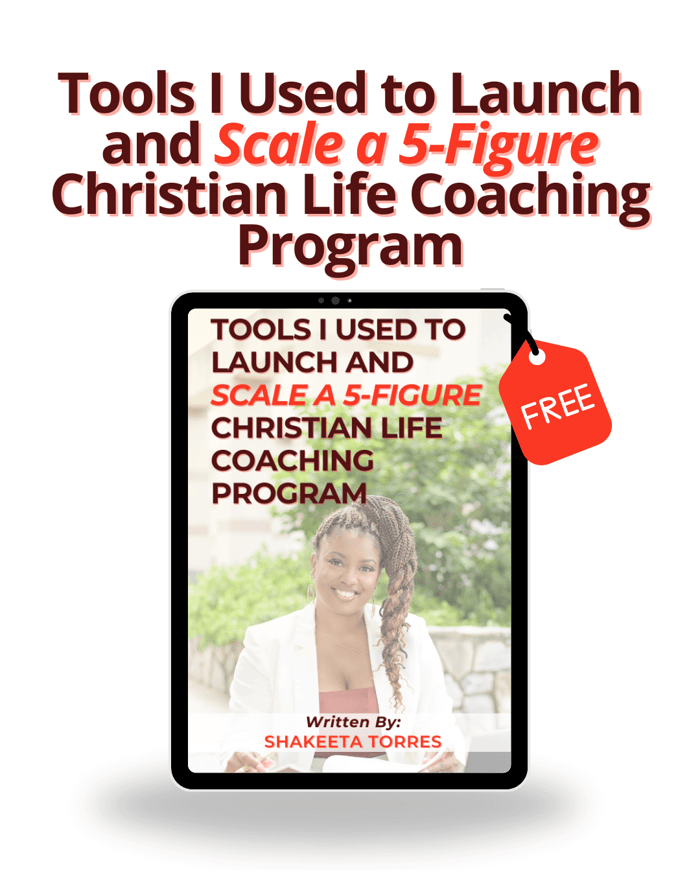
📘 “Tools I Used to Launch and Scale a 5-Figure Christian Life Coaching Program.”
It gives you quick, practical steps to choose the right platform, create faith-filled content, and get in front of the people God has called you to serve.
Your next level of visibility starts now.
 CLICK HERE FOR YOUR FREE GUIDE
FAQs
1. What’s the best way for Christian life coaches to grow their audience online?
Christian life coaches can grow their audience by choosing the right platform—social media, podcasting, or speaking—and creating content that aligns with their faith and message. Consistency and authenticity attract the right clients.
2. Should Christian life coaches focus on social media, podcasting, or speaking?
Each method has its benefits. Social media offers wide reach, podcasts build deeper connection, and speaking engagements establish authority. Christian life coaches should evaluate their strengths and audience to decide.
3. How can Christian life coaches attract clients without feeling “salesy”?
Christian life coaches can focus on serving and sharing value rather than pushing sales. Storytelling, testimonials, and content that encourages spiritual growth naturally draw clients.
4. Can Christian life coaches combine multiple marketing methods effectively?
Yes. Christian life coaches often combine social media, podcasts, and speaking engagements to reach a wider audience. A multi-channel strategy ensures consistent visibility and impact.
5. What mistakes should Christian life coaches avoid when marketing online?
Avoid inconsistency, neglecting your niche, or copying others. Christian life coaches should focus on authentic, faith-aligned content and engage with their audience regularly to build trust and credibility.