


Table of Contents
- Christian Life Coaches: How to Attract Clients Authentically
- Introduction: Ministry Meets Marketing—Without Compromise
- Part 1: The “Salesy” Feeling—Where It Comes From
- Part 2: Attracting Clients Begins With Clarity of Calling
- Part 3: Serve First, Sell Second
- Part 4: Build Trust Through Authentic Content (Not Performance)
- Part 5: Let Your Story Do the Evangelizing
- Part 6: Create Offers That Feel Like Ministry, Not Marketing
- Part 7: Use Holy Spirit–Led Marketing Strategies
- Part 8: Speak to the Pain, Point to the Promise
- Part 9: Create “Pull” Energy Instead of “Push” Energy
- Part 10: Use Soft Invitations Instead of Hard Pitches
- Part 11: Allow Clients to Self-Select Through Alignment
- Part 12: Remember: Your Coaching Is an Answer to Someone’s Prayer
- FAQs
Christian Life Coaches: How to Attract Clients Authentically
Christian Life Coaches: How to Attract Clients Authentically
Introduction: Ministry Meets Marketing—Without Compromise
If you’ve ever asked, “How do I attract Christian clients without feeling like I’m pushing myself on people?” —you are not alone. Many Christian life coaches struggle with this tension.
You were called to serve, disciple, empower, and help people transform, not hustle, manipulate, or perform like a traditional marketer. You’re led by purpose, not pressure. Spirit, not strategy alone.
And yet…
You still need clients.
You still need visibility.
You still need a sustainable coaching business.
Here’s the truth:
You absolutely can grow your coaching business without ever feeling salesy, pushy, or out of alignment with your faith. In fact, when marketing is done from a place of integrity and Holy Spirit-led clarity, it becomes ministry, not manipulation.
Let’s break down how Christian life coaches can attract clients naturally, authentically, and biblically.
Part 1: The “Salesy” Feeling—Where It Comes From
Christian coaches often feel salesy because they think marketing is about:
❌ convincing people
❌ chasing people
❌ proving themselves
❌ sounding impressive
❌ posting constantly
But here’s what marketing actually is—especially for faith-driven coaches:
👉 Inviting people into transformation.
👉 Showing them what’s possible.
👉 Clarifying the value of your assignment.
👉 Letting God highlight you as the solution to someone’s prayer.
When you shift from sales to service, everything becomes easier.
Jesus never begged people to follow Him. He simply showed up, served, taught, healed, and offered truth. Those who were meant for Him came. You can operate the same way.
Part 2: Attracting Clients Begins With Clarity of Calling
Clients are drawn to clarity, not confusion. When your message is vague, your audience is vague. When your message is Spirit-directed and specific, people recognize you immediately as the coach for them.
Ask yourself:
Who am I truly called to serve?
What pain are they experiencing right now?
What transformation can I deliver through God’s grace?
What makes my voice, background, or story uniquely positioned to help them?
The clearer your calling, the easier your marketing becomes.
Christian life coaches who experience steady growth are the ones who boldly stand in their God-given niche.
Part 3: Serve First, Sell Second
If you want to eliminate the “salesy” feeling, adopt this simple biblical principle:
“Freely you have received, freely give.” —Matthew 10:8
This doesn’t mean coaching for free. It means demonstrating value before asking for investment.
Practical ways to serve first:
Share your story and testimony
Post short, practical coaching tips
Host free webinars or devotionals
Offer prayer or encouragement posts
Teach small parts of what you coach
Give one actionable step your audience can apply immediately
When people experience transformation before they ever pay you, the sales process becomes effortless. You’re not selling, you’re continuing a journey they’ve already started with you.
Part 4: Build Trust Through Authentic Content (Not Performance)
Trust is the currency of coaching. The more real you are, the more clients you attract.
People don’t want a coach who looks perfect. They want a coach who understands their pain, relates to their journey, and points them back to Christ.
Share content that reflects:
Your faith
Your process
Your struggles
Your breakthroughs
Your values
Your personality
This positions you as a guide, not a salesperson. And here’s the beautiful part:
When people trust you, they ask about your offers, no pushing required.
Part 5: Let Your Story Do the Evangelizing
Your testimony is your most powerful marketing tool. Why? Because people connect with stories more than strategies.
Share things like:
Why you became a coach
What God delivered you from
What he taught you
What transformation YOU experienced
How your journey helps others
You don’t need complicated funnels, your story already contains the message your ideal clients need to hear. Many Christian life coaches attract clients simply by sharing authentically what God has done in their lives.
Part 6: Create Offers That Feel Like Ministry, Not Marketing
If your offers feel forced, they’ll be hard to promote.
Instead, build offers from these questions:
What problem is God calling me to solve?
What transformation can I help someone achieve?
What method or framework has God placed in my hands?
How can I structure this in a way that feels aligned, not pressured?
When your offer is rooted in obedience, marketing it becomes an act of worship, not work.,
Part 7: Use Holy Spirit–Led Marketing Strategies
You are not marketing alone. The same God who called you will also highlight you.
Pray through your marketing:
“Lord, show me where to show up.”
“Lord, lead me to the clients You’ve prepared.”
“Lord, give me words that reach the hearts You’ve assigned to me.”
“Lord, remove striving and replace it with grace.”
When God breathes on your marketing, one simple post can bring the right person into your coaching program.
This is the supernatural advantage that Christian life coaches have, and it removes every trace of sales pressure.
Part 8: Speak to the Pain, Point to the Promise
People don’t invest because you have a program. They invest because you offer transformation.
Your messaging must be anchored in:
➡ What your clients are struggling with
➡ What they desire
➡ What promises God has for them
➡ How your coaching bridges the gap
Your role is not to sell. Your role is to guide.
Position yourself like a shepherd leading clients from where they are to where God is calling them.
Part 9: Create “Pull” Energy Instead of “Push” Energy
Salesy marketing pushes people. Aligned marketing PULLS them.
You create pull energy by:
Sharing results and testimonials
Demonstrating your expertise
Being consistent in content
Speaking directly to your ideal client
Showing your values unapologetically
Letting God highlight you
Instead of chasing clients, you attract the ones meant for you.
This is why Christian life coaches can grow without ever compromising integrity or peace.
Part 10: Use Soft Invitations Instead of Hard Pitches
No more:
❌ “Buy now!”
❌ “Limited spots left!”
❌ “Join before it’s too late!”
Use gentle, faith-filled language like:
✨ “If this resonates with your spirit, I’d love to walk alongside you.”
✨ “If you feel God nudging you to grow in this area, this program is for you.”
✨ “If you’re ready for clarity and breakthrough, let’s explore how I can support you.”
Soft invitations are powerful because they honor the Holy Spirit’s timing—not pressure or urgency.
Part 11: Allow Clients to Self-Select Through Alignment
You don’t have to convince anyone. Your ideal clients will recognize your voice.
Jesus said,
“My sheep hear My voice, and I know them, and they follow Me.” – John 10:27
The same spiritual principle applies to coaching: Your clients will know when your voice is for them. Let God send the ones aligned with your assignment. Release the pressure to market like everyone else. This is the confidence God gives Christian life coaches who trust the process.
Part 12: Remember: Your Coaching Is an Answer to Someone’s Prayer
Think of the person right now who is:
Crying out for guidance
Struggling with purpose
Battling fear
Longing for clarity
Feeling spiritually stuck
Asking God for direction
Your coaching is the solution they’re praying for. You are not selling, you are stewarding a calling. When you embrace this mindset, marketing becomes ministry.
Final Takeaway: Attraction > Persuasion
You don’t need sales tricks.
You don’t need to pressure anyone.
You don’t need to perform.
You simply need to:
✔ Serve well
✔ Show up consistently
✔ Share your story
✔ Offer your gifts
✔ Trust God with the increase
This is how Christian life coaches attract clients with ease, grace, and alignment.
Download the free resource:
📘 “ Tools I Used to Launch and Scale a 5-Figure Christian Life Coaching Program.”
This guide will help you:
Define your ideal client
Clarify your God-given message
Build a content plan that attracts clients
Create a faith-based marketing strategy with confidence
Because when your message becomes visible, your impact becomes unstoppable.
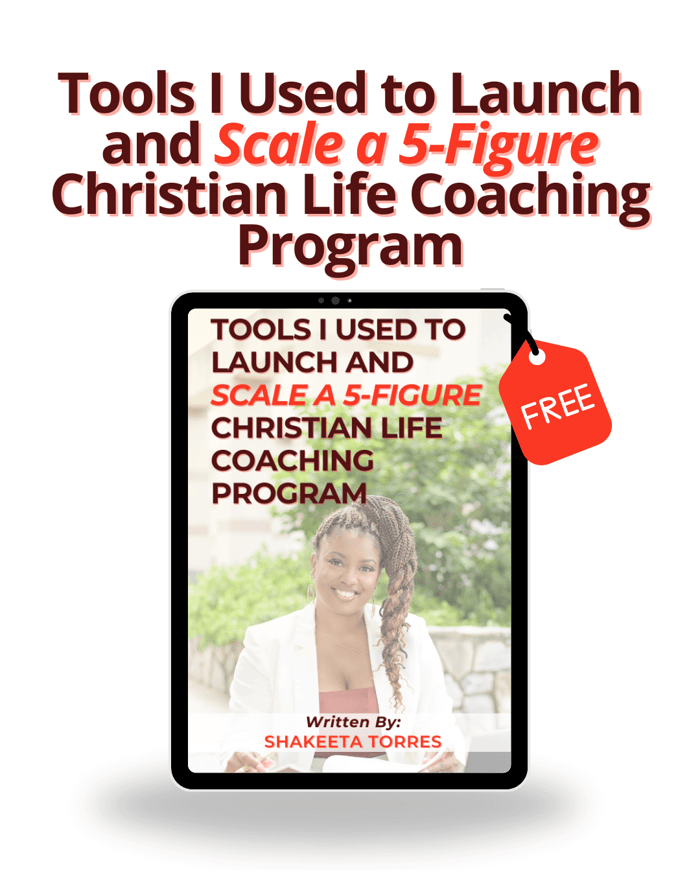
CLICK HERE FOR YOUR FREE GUIDE
FAQs
1. How can Christian Life Coaches attract clients without feeling salesy?
Christian Life Coaches attract clients authentically by leading with value instead of pressure. Sharing biblical principles, offering free resources, and speaking directly to the needs of their ideal audience builds trust naturally. When clients feel seen, supported, and spiritually aligned, they initiate the next step—no pushy tactics required.
2. What marketing methods feel natural for Christian Life Coaches?
Christian Life Coaches thrive using relational, service-led marketing. Storytelling, testimonies, educational posts, prayer-based guidance, workshops, and email devotionals help create connection without manipulation. These approaches keep marketing ministry-centered while still inviting clients to work with you.
3. How can Christian Life Coaches share their offers without being pushy?
They can present offers as an invitation, not a demand. State the problem, show the transformation, and clearly describe how your program helps. When you communicate from a place of calling, clarity, and confidence—not urgency or pressure—people feel you’re guiding, not selling.
4. What mindset helps Christian Life Coaches avoid feeling “salesy”?
Shift from “selling services” to “serving people.” Christian Life Coaches often feel uncomfortable promoting themselves, but reframing marketing as ministry transforms everything. You’re not chasing clients—you’re stewarding solutions God placed in your hands to help those He sends to you.
5. How important is authenticity in attracting Christian clients?
Authenticity is everything. Christian clients want alignment, transparency, and a coach who genuinely walks with God. Sharing your faith journey, your coaching values, and your real-life experiences builds credibility and connection. When you show up as your true self, your ideal clients naturally gravitate toward you.